Sports and Esports
Learning from the Past while Embracing the Future

Future
COVID-19, it seems, has reiterated to the mainstream sports industries what exactly it is about esports that glimpses the future of all sports experiences: the future is digital, the future is global, the future is online. The coming years sport experiences of all kinds will see a redistribution of the balance between digital and physical, between onsite and online, and between local and global. We expect that as these industries merge, the cutting edge for innovation and creativity will be in creating crossovers between tradition and future. At the crossroads between traditional sports and esports, both can innovate and grow together, especially in terms of creating new breeds of fan experiences.Features
It may be evident to most people what constitutes a sport, but what constitutes an esport typically needs some explanation. Like traditional sports there are different materializations of esports in terms of game events, official governing bodies and levels of professionalism, but as a rule of thumb computer-generated and competition determine the potential for a computer game to become an esport. Furthermore, esports have certain unique features for a sport: the first is that a computer game is intellectual property and any subsequent forms of esports consequently has an owner—usually in the form of a game publisher like Riot, Activision Blizzard, or EA. The second feature is that the game itself is digital; play takes place in a computer-generated reality instead of a physical reality. Although practically all sports integrate technology into their play to some degree (be it a football, a bicycle or a judo mat), these technologies are always part of a game taking place in physical reality. In esports technology both creates the play as well as the place where it takes place.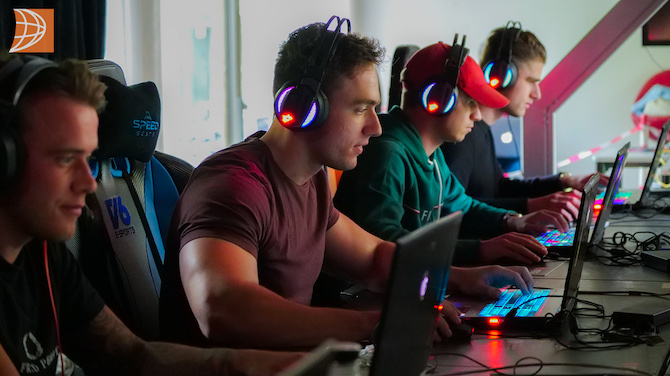
New audience
The mainstream is yet to fully accept esports as a sport. Covid-19, however, may have helped open the eyes for some: during the pandemic a small number of traditional sports like motorsports, football, triathlon, and cycling, experimented with virtual variants of their sports to stay in touch with their fans (Ellison, 2020). The digital versions of each of these sports succeeded in creating spectator experiences which reached a new, intergenerational, global, and online audience. Being forced to think outside the box resulted in creative, new, digital alternatives to experiencing each of these sports, adding depth and breadth to their respective fan experiences.Not only online experiences
Esports have a head start in regard to such digital sports experiences, but they too have felt the effects of Covid-19. Esports tournaments and leagues depend on onsite events for the same revenue streams as do traditional sports (i.e. ticketing and sponsorships). In February, Modern Times Group (the parent company of two prominent esport event organizers ESL and Dreamhack) reported a net income of $1.5B USD for the full financial year 2019 and projected an increase for 2020 (Seck, 2020). In March, hardly a month later, it announced a projected revenue drop between 35-45% due to Covid-19 (Seck, 2020c).
Although esports event organisers were forced to cancel the onsite portions of their tournaments and leagues, they mostly managed to let the games themselves take place online. Although online audience spiked on Twitch (an increase of 31% in March according to Gualt, 2020), esports event organizers took a blow in terms of revenue and income, and moreover in terms of fan and brand engagement. The loss of the onsite events showed just how important the onsite experience is for esports and traditional sports alike: meaningful engagement and interaction for fans and brands is hard to create using online experiences alone. Fan experiences stretch beyond the scope of spectating games; they are social experiences made up of a blend of onsite and online touchpoints and engagement which together create fan experiences.
Identity and loyalty
Fan experiences are about the thrill and joy of celebrating a game and expressing identity and are the same for sports and esports alike. Traditional sports have over the course of a century mastered the onsite fan experience: they have a proven track-record in providing individual and group identity and gaining long-term loyalty. Sports organisations typically play a big part in the celebration of local (regional and national) identities. In terms of identity, esports are currently providing a solid but rather narrow avenue of congruence through the love of a specific game and the love of specific players. Esports teams are building the way toward a loyal fanbase but have fallen back on traditional markers of identity (a region, a country) with varying success. For now, it seems that esports’ global, digital and agile nature (Scholz, 2019) has a curbing effect on providing identity.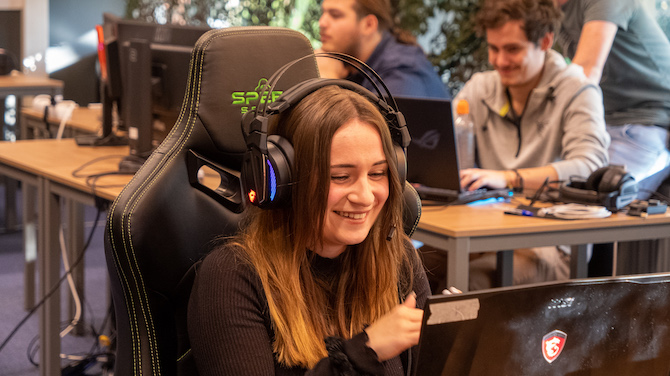
The esports industry can learn a great deal from traditional sports in terms of identity but it is the other way around when it comes to attracting and engaging with younger audiences. Millennials and Gen Z demographics have grown up in a digital, global, online world that has provided experiences for them where they want it and when they want it. Esports cater to these audiences in creating fan experiences that are in tune with the times: they provide a blend of synchronous and asynchronous online and onsite experiences around competitive gaming. From official broadcasts on Twitch and Youtube, to influencer reporting, to LAN-parties, to Reddit discussions, to viewing parties, to crowd funded prize money, spectatorship and engagement is ubiquitous, diverse, globally accessible and community driven and focused. In a word, these fan experiences are in tune with the times because they are a product of their time.
Specialisation at BUas
Describing esports fan experiences equates to describing experiences in step with global trends and developments. It follows therefore that esports experiences glimpse the future of all fan experiences. At the same time, a deep and rich history of fan experiences is readily available to dish out insights for anyone willing to look and listen. Fan experiences are universal (the thrill and joy of celebrating a game and expressing identity) and so opportunity abounds for those willing to learn from the past while embracing the future. BUas will be embracing this opportunity in the new Sports & Esports specialisation for students of Leisure & Events. Here the following vision into play: both traditional sports and esports can innovate in their fan experiences by attracting new audiences, by expanding and deepening engagement with fans through a blend of onsite and online engagement, and by creating innovative spectator experiences that are interactive, inclusive and diversified.References:
- Ellison, J. (2020, 10 April). Here’s how the world has been shifting to virtual sports: 8 big moments. RedBull. https://www.redbull.com/int-en/virtual-sports-best-moments
- Gualt, M. (2020, 31 March). 'Something Needs to Fill That Void.' As Stadiums Go Quiet, Esports Are Having a Moment. Time Magazine Online. https://time.com/5812633/esports-coronavirus/
- Scholz, T. M. (2019). eSports is Business: Management in the World of Competitive Gaming. Switzerland: Palgrave Pivot.· Seck, T. (2020, 6 February). Modern Times Group Reports Further Growth of Esports Revenues, $1.5B Net Income for 2019. The Esports Observer. https://esportsobserver.com/modern-times-group-q42019/
- Seck, T. (2020, 30 March). MTG Assess Economic Impact of COVID-19, ESL and DreamHack to Reduce Costs by $15M. The Esports Observer. https://esportsobserver.com/mtg-economic-impact-covid-19/
- TwitchTracker. (2020). TWITCH STATISTICS & CHARTS. Retrieved 29 April, 2020, from https://twitchtracker.com/statistics
Dit artikel is eerder verschenen in Uncover, een uitgave van het domein Leisure & Events van de Breda University of Applied Sciences. Nieuwsgierig naar de andere artikelen uit Uncover? Stuur dan een mailtje naar ton@nrit.nl.
Trefwoorden: sport, e-sport, corona