The sports venue of the future
Students from Built Environment, Imagineering, and Leisure & Events are designing together

BUas is participating in a European Erasmus+ programme to design the sports venue of the future. This collaborative initiative involves partners from three countries - the Netherlands, Portugal, and Turkey - working collectively to innovate and validate sustainable sports facilities. There is a growing emphasis on how new sports centres in neighbourhoods and rural areas contribute to inclusion, social cohesion, mutual respect, and sportsmanship. Highlighting these aspects is crucial for fostering a sense of community through sports engagement. Sports is a powerful tool to unite people as it is accessible to many people of all ages and sports venues are places where people come together. Therefore, it could enhance social cohesion and inclusion.
Bart Stadhouders is a lecturer of Leisure & Events within the Sports & Esports Management specialisation.
Arun Swami Persaud works for Orange Sports Forum and is project leader of the Erasmus+ project NextGenerationSportsFacilities.
"Our current initiative presents a significant opportunity to transform the concept and purpose of sports venues across Europe. By focusing on creating spaces that not only encourage physical activity but also enhance the well-being and happiness of our communities, we are shaping a vision for cities that are not only more beautiful and healthier, but also promote the values of true sportsmanship.” (Arun Swami Persaud)
Different cases
The Dutch contributors to the NextGenSportsFacilities project include the NOC*NSF (Netherlands Olympic Committee), Breda University of Applied Sciences, and Orange Sports Forum. Portuguese partners encompass the Instituto Politécnico de Beja and QXote LDA, while Turkey is represented by Istanbul Teknik Universitesi. In every country, there are different case studies and there are differences in how sport is organised in Turkey, Portugal or the Netherlands. In Turkey, for instance, the case study is about sports in an urban context as the sport complex is in the middle of Istanbul. In Portugal, the case study is more about sports in a rural context while in the Netherlands, sports are still very traditionally organised with a sport club for each type of sport, a fenced field, a dressing room and a canteen. The project aims to think outside of these existing boundaries and design a venue for the future.
Diverse student team
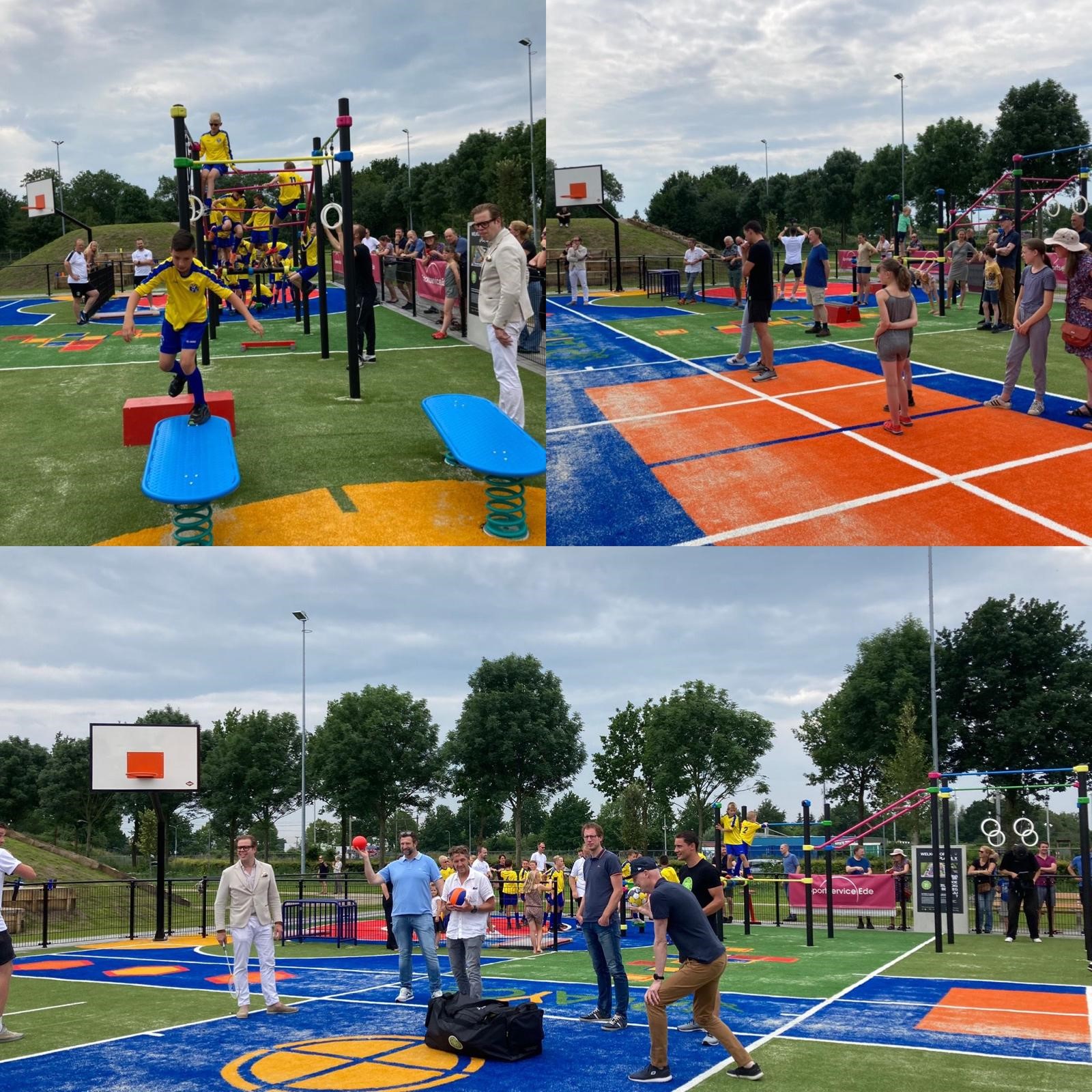
A diverse project team in the Netherlands was created consisting of students from various domains within BUas: the Master Imagineering and Built Environment, including the involvement of Sports and Esports as well as Urban Life and Placemaking. The students use design thinking and prototyping to present mock-ups of their sports venue of the future. In this process, multiple stakeholders are involved, varying from residents to experts on sports infrastructure and innovations. The sports venue of the future should serve as a best practice example to change the sports infrastructure in the Netherlands, hence the involvement of NOC*NSF in the project.
We also promote the values of true sportsmanship.
Wicked problems
The first step in the project was to identify so-called ‘wicked problems’. These wicked problems are issues (or opportunities) which were identified after a site analysis. For the Netherlands, we identified wicked problems such as the health of the population, water management, heating of the area, engagement in sports, fair play, and inclusion. We zoomed in on the city of Cuijk where we use the existing sport complex as our case to redesign the area into the sports venue of the future. As the location is close to the river Meuse, potential flooding of the river could be a scenario to take into account. Another problem we encountered is the lack of trees and foliage on the complex which could lead to heat stress in the summer.
In Portugal and in Turkey they analysed different wicked problems such as the infrastructure of the complex and limited accessibility, but also maintenance issues and sustainability issues such as a lack of renewable energy, water, and waste management.
With these wicked problems in mind, students organised multiple stakeholder sessions to gather information for their designs or mock-ups. Students in the three countries exchanged their design ideas with each other and three students of Built Environment facilitated a three-day design challenge in Portugal for the students of IP Beja. These final designs are to be judged per country by an international jury.
"As we endeavour to rethink sports venues, it is crucial to underscore the importance of sustainability in our designs. Prioritising the development of parks and green spaces that are environmentally conscious will enable us to address the challenges posed by a changing climate while nurturing more resilient and inclusive urban environments.” (Arun Swami Persaud)
Impact
When looking at the current amateur sports infrastructure and the way it is organised, you will find many complexes with, for instance, a football club, hockey club or tennis courts all with their own facilities (dressing rooms, clubhouse, etc.) and with a fence around the property. The challenge in this project is to break through these barriers and create a more welcoming, open environment which invites people to become more active in sports and to also try different sports. Therefore, students will integrate aspects such as hospitality, multifunctionality, biodiversity, and the latest innovations in sports into their final designs. Design will be used to foster interactions and multi-use opportunities. You can, for instance, look at sport complexes as a future buffer between nature and the city or you can make a sport complex part of the city’s energy production and facilities. This means using the energy created on the sport complex to heat nearby houses (expert session of the NGSF project, 2024). By doing this, you also create more commitment among residents. You can then evolve towards a Community Centre where sports (and e-sports) play an important role but that also serves as a place to meet and interact with other locals.
The project will contribute to the priorities in the field of sport via encouraging participation in sport and physical activity (Holland Sports Industry, 2023). Through designing more accessible sport facilities, more people from all demographics will be able to participate in physical activity. This project aims to take away barriers often imposed by the sport infrastructure. When you take the fences away and make the target group part of maintaining and taking care of the facilities, you can create a more welcoming environment that is used more often and for multiple purposes.
Design will be used to foster interactions and multi-use opportunities.
Also, the project will contribute to promoting integrity and values in sport. Multifunctional and multi-purpose sport facilities encourage the coming together of different target groups with different demographic and socio-cultural backgrounds. This strengthens social inclusion and sportsmanship (Holland Sports Industry, 2023). There are examples to be found of sport complexes where they do gardening in a community garden and use all the vegetables and fruits in their own canteen to organise cooking workshops. Also, when the Olympic Games in Paris are looked at, many sport activities will be organised in the outskirts of Paris. Neighbourhoods with a bad reputation where sport is used to bring people together and provide opportunities for youngsters to participate and revitalise these areas.
Process
In September 2024, a second prototyping round will be started to build upon the first designs of the students followed by a dissemination phase to share important findings of the project through conferences and publications.
Sources
- Erasmus+: NextGenSportsFacilities - Hollandsportsindustry.com.