Venice, Look and Learn – Again!
Why all-who-can-pay access fees miss the point on overtourism
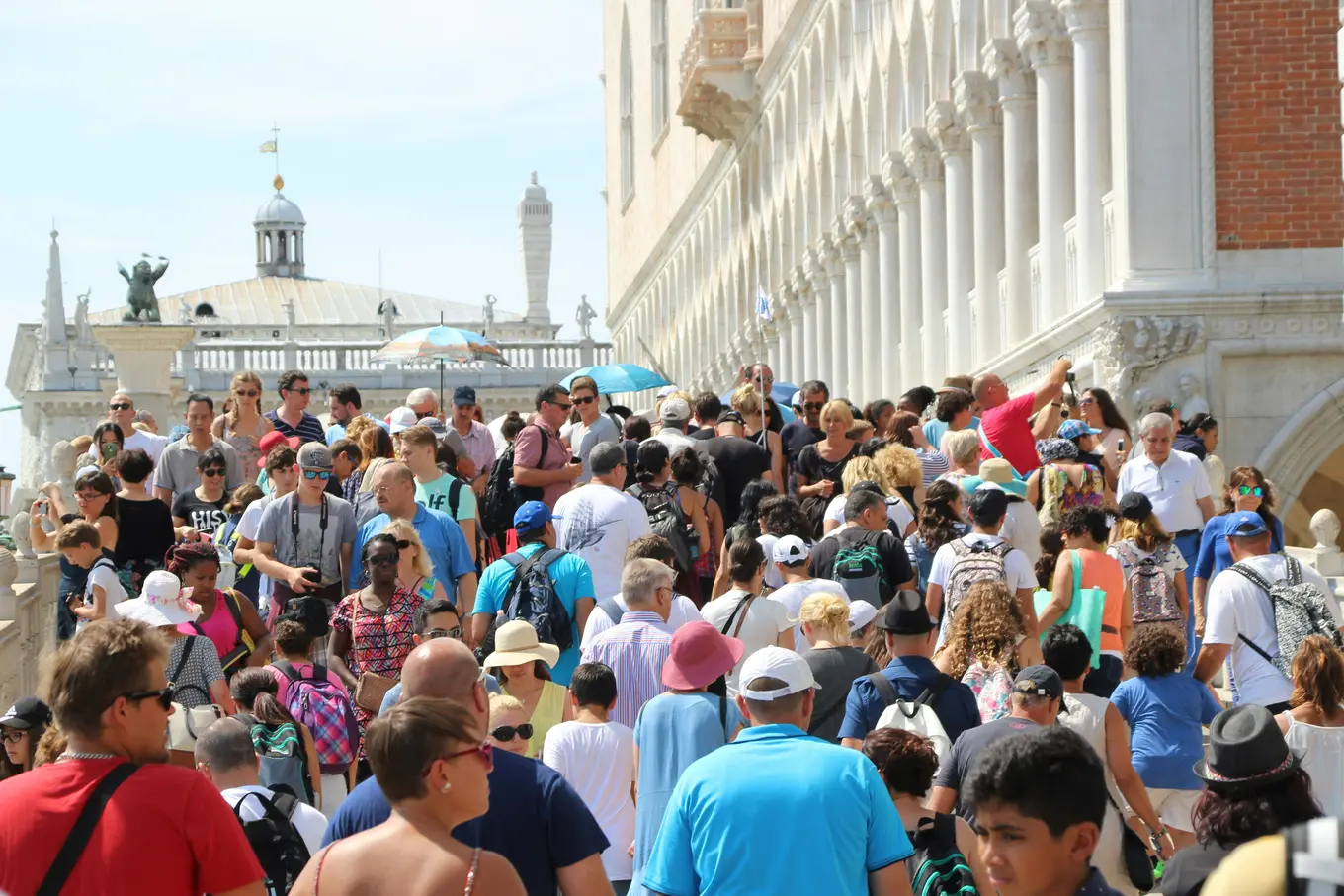
Since their inception, the city of Venice has been the archetypal case in tourism development studies. It epitomises metaphors such as cannibalisation (success at the cost of survival), commodification (heritage as attraction, deprived of its organic ties with the community) or thanatophilia (the admiration for the dying, the last chance to visit something that will soon be gone). It inspired popular managerial models, such as the socioeconomic carrying capacity or the functional tourist region. It anticipated trends, such as the progressive loss of a stable working population, substituted by rentiers and temporary city users. It may well be said that any discussion about sustainable tourism, tourism resilience or, more recently, overtourism, would inevitably lead to Venice as a prime terrain for exemplification and scrutiny.

Inhoud van dit artikel
The access fee
Now Venice is doing it again: the introduction of an access fee system in the high season since 2024 did what no other urban destination had dared before: turn the city itself into a full-fledged, pay-to-get-in tourist attraction, with exemptions for those who live and work in the city, regional residents, and overnight stayers in its accommodation sector. The stated goal is to deter day visits (the majority), which contribute close to nothing to the local economy, but bear on local resources, mobility systems, and spaces, while raising some income from those who still decide to join the slightly more expensive party.
So what’s wrong with this experiment? Firstly, its stated impacts have not been demonstrated. As could be expected: the demand to visit Venice in high season from the nearby region is so inelastic that ten euros do not make any difference, and if you do spend on that, maybe you save on an ice-cream and a visit to a museum. Adding to that, the system of exemptions is tricky, privacy-obtrusive, and may discourage many other mobilities that feed what is left of the sociocultural centrality of the city: business visitors, event attendees and course participants or even guests at homes of people who are not official residents, students or second-home owners. This system, inevitably, does not only construct a fracture in the ‘right to visit a city’, between ‘good visitors’, who stay and spend, and ‘bad (poor) visitors’, who’d better stay out; it also operates by reflection on its residents – those who abide with the tourism mobility system, as hoteliers and Airbnb hosts living off tourism, and all the others, who at some point rely or depend on other sorts of personal connections.
The demand to visit Venice in high season from the nearby region is so inelastic that a ten-euro fee does not make any difference.
Paradox
In 2026, overtourism, as widely claimed in critical tourism research - such as that promoted by the ATLAS SIG Space, Place, Mobilities in Tourism - is not just about visitor pressure in space, but rather about the touristification of any facet of residents’ lives. While an access fee system might act on overcrowding on peak days (and Venice’s doesn’t), resident communities in Venice as in (most) other southern European historical cities are under threat for lack of housing, vanishing civic services, delocalising high-value jobs, loss of neighbourhood ties. The fee’s governmental logic deepens the plunge of the historical city into a sacrifice zone, a cash cow whose gains do not support life but only business.
The greater challenges from overtourism today come from housing affordability and the rentier economy; access fees do not solve these problems.
Venetians have noted this paradox, and have taken a stance against it. Most of them would just want a more restrictive system; one that effectively leaves out the ‘tourist excess’; or a radical ban on short-term rentals, which would possibly flow back to the residential market. But the basic question is that in order to fix an issue that only affects the top layers of the hospitality industry, whose playing field is a high quality city for high value customers, Venice has introduced a new stratification in terms of mobility justice, and a stigma against its very own citizens, the ones who resist in place and struggle daily to keep it alive. If Venice’s move paves the way for this sort of ‘managerial solutions’ to overtourism, instead of revisioning its structural determinants, such as the neoliberal-fuelled appropriation of spaces of social reproduction and the unbridled expansion of tourist mobility systems, the future of cities is bleaker than what we thought.

Antonio Paolo Russo is professor in the Department of Geography, Rovira i Virgili University (Spain) and coordinator of the Space, Place, Mobilities in Tourism SIG of ATLAS.